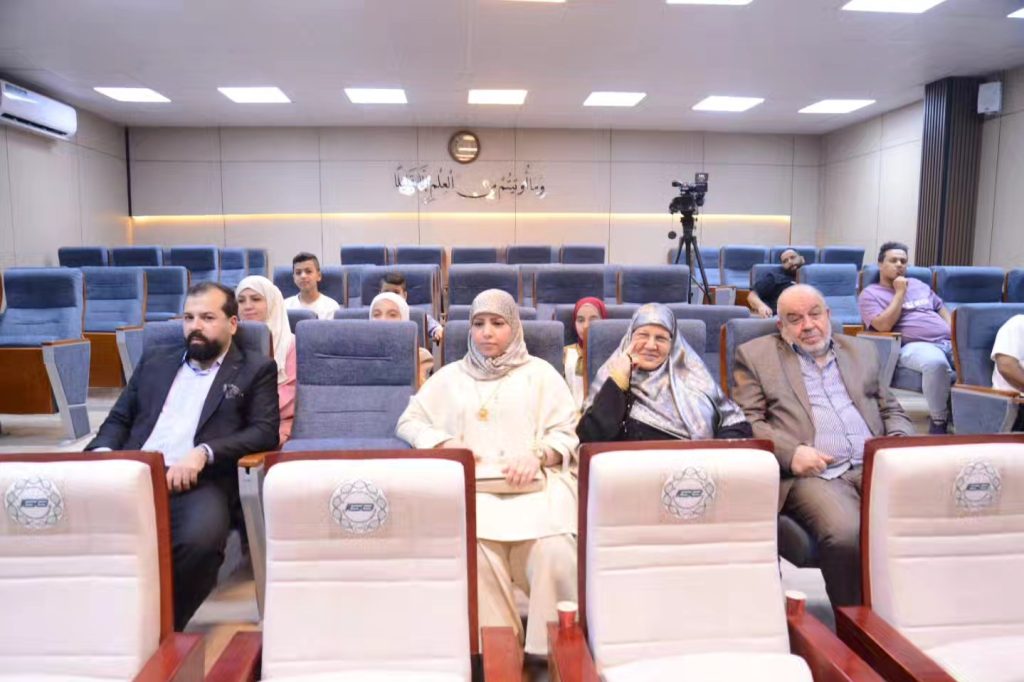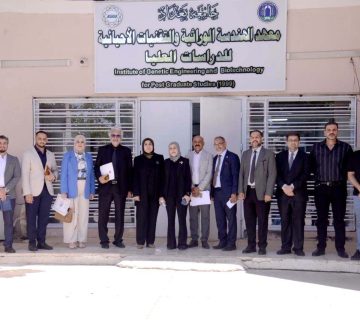

Institute of Genetic Engineering and Biotechnology for Postgraduate Studies / University of Baghdad discussed the master’s thesis submitted by the student “Ibrahim Ali Abbas,” entitled:
“Molecular Detection of Virulence Genes (ureB, sabA, iceA1, and vacA) in Helicobacter pylori Associated with Gastrointestinal Diseases among Iraqi Patients,” under the supervision of Assistant Professor Dr. “Zainab Hikmat Aboud.”
The current study was designed to detect the gastric bacterium Helicobacter pylori and characterize its virulence-associated genes, including (ureB, sabA, iceA1, and vacA), in gastric biopsy samples collected from Iraqi patients suffering from gastrointestinal diseases. The study also aimed to determine the prevalence rate of this bacterium and the allelic variation of the vacA genotypes, as well as to evaluate their association with clinical, endoscopic, and histopathological findings. In addition, the study measured cytokine levels to investigate the inflammatory response associated with the infection.
The study recommended increasing the number of gastric biopsy samples collected during endoscopy, particularly from the gastric antrum and the gastric angle, in order to overcome the uneven distribution of Helicobacter pylori. It also recommended adopting an integrated diagnostic protocol combining the Rapid Urease Test (RUT), histopathological examination, and PCR technique to reduce false-negative results and improve diagnostic accuracy.
Furthermore, the study emphasized the importance of incorporating the analysis of virulence genes such as (vacA, iceA1, and sabA) into clinical evaluation because of their significance in predicting disease severity and contributing to personalized treatment strategies for patients.