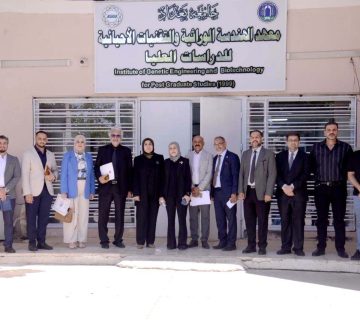

The Institute of Genetic Engineering and Biotechnology for Postgraduate Studies at the University of Baghdad discussed the Master’s thesis entitled “Effect of a Histidine Kinase Inhibitor on the Expression of the SaeRS Regulator and Adhesion Genes (fnbA and fnbB) in Clinical Isolates of Staphylococcus aureus,” submitted by Master’s student Inas Khalid Mizaal under the supervision of Assistant Professor Dr. Abdul Amir Mohammed Gharib.
The study aimed to evaluate the effect of phenazopyridine hydrochloride (PP-HCl), as a potential histidine kinase inhibitor, at sub-inhibitory concentrations on the expression of the genes saeS and saeR, which constitute the two-component SaeRS system, as well as the adhesion-associated genes fnbA and fnbB in clinical isolates of Staphylococcus aureus. The study also evaluated the effect of the compound alone and in combination with the antibiotic ciprofloxacin on biofilm formation.
The study recommended conducting further investigations using S. aureus isolates from different clinical sources to confirm the effects of PP-HCl and determine whether its inhibitory effects on biofilm formation and adhesion-gene expression can be generalized. The evaluation should also be expanded to include the protein and functional levels of the SaeRS–FnBP pathway, in order to elucidate the potential molecular mechanism underlying the observed effects and identify the stage at which the compound interferes with biofilm formation.
The study also recommended evaluating PP-HCl in combination with selected antibacterial or antibiofilm plant-derived compounds and extracts, and investigating the nature of their interactions and the possibility of synergistic effects. Such studies may contribute in the future to the development of adjunctive therapeutic strategies against infections caused by Staphylococcus aureus.