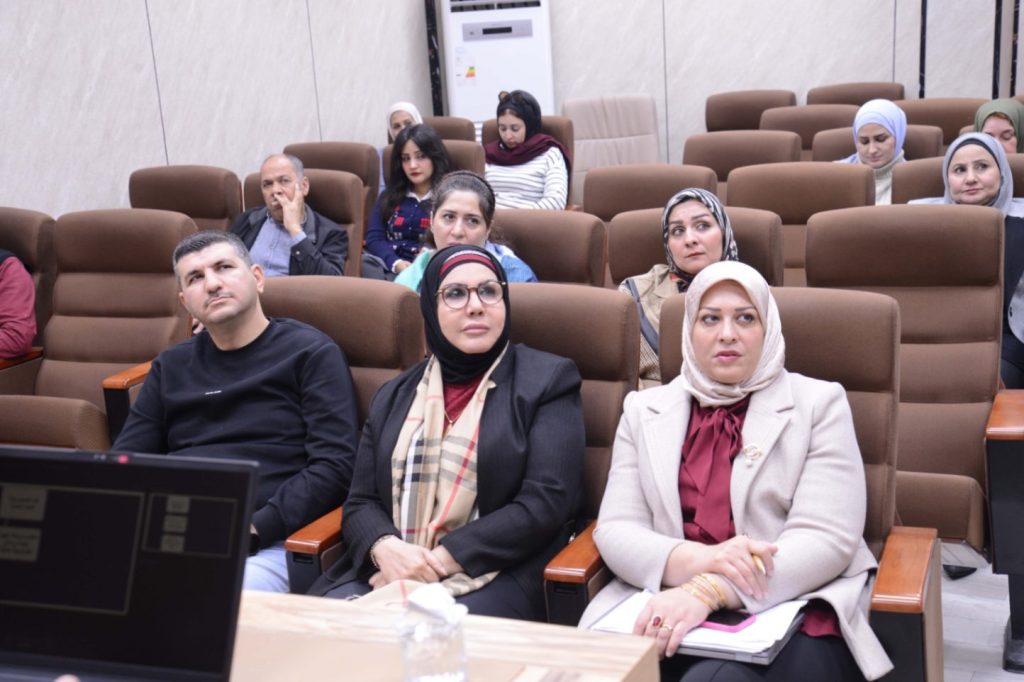
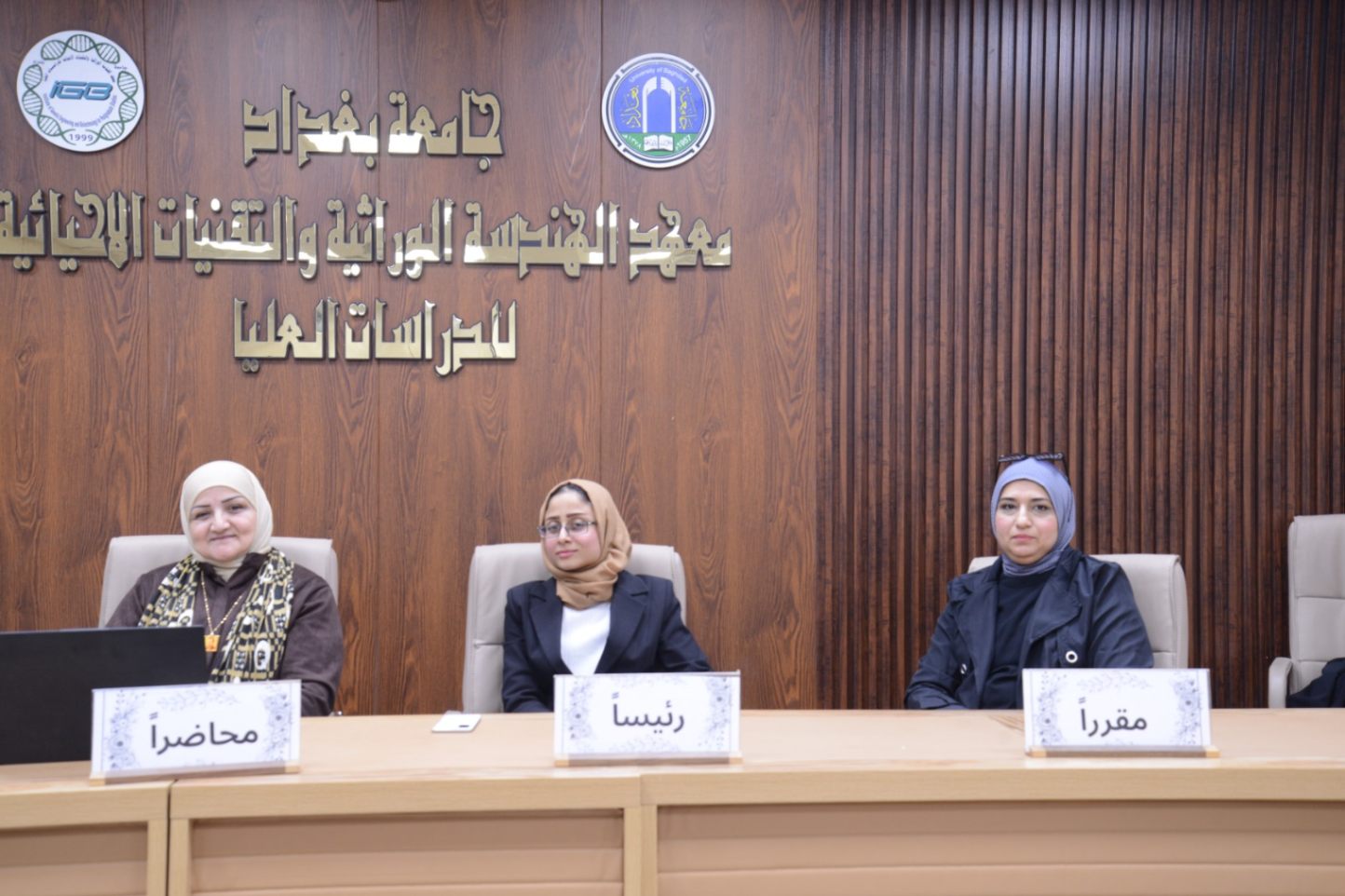
The Institute of Genetic Engineering and Biotechnology for Postgraduate Studies / University of Baghdad held a workshop entitled “The Role of Human Resources in Enhancing Job Satisfaction and Improving the Work Environment.” The workshop was delivered by Ms. Shorouq Sabah Jaber, Lecturer and Head of the Human Resources Division, while Ms. Mayassa Abdullah, Assistant Lecturer, and Ms. Zainab Abdul Aziz served as rapporteurs.
The workshop aimed to discuss job satisfaction as a key human factor that represents the backbone of any institution. It is considered an essential element in improving the work environment and one of the most important indicators used to measure the success of human resources management, which is regarded as a fundamental pillar for the success of contemporary institutions.
The workshop highlighted that job satisfaction is a key indicator of employee commitment and productivity, while a positive work environment contributes significantly to enhancing institutional efficiency and stability.
It also addressed the concept of human resources in improving performance and productivity by boosting employee morale, attracting and retaining talents, strengthening institutional belonging, and increasing loyalty. In addition, various types and dimensions of job satisfaction were discussed.
The workshop recommended that human resources management is no longer a traditional administrative function, but rather a strategic tool that contributes to building a healthy work environment that enhances employee satisfaction and drives productivity and creativity through the adoption of fair policies and support for professional development.
Furthermore, the workshop emphasized that providing a safe and motivating work environment enables institutions to achieve a balance between their economic goals and the human needs of their employees.
It also concluded that investment in human resources represents a direct investment in the future of the institution and the sustainability of its success.
This activity directly contributes to Sustainable Development Goal 8 (Decent Work and Economic Growth) and indirectly supports SDGs 3, 4, and 16 by promoting employee well-being, professional development, and institutional effectiveness.