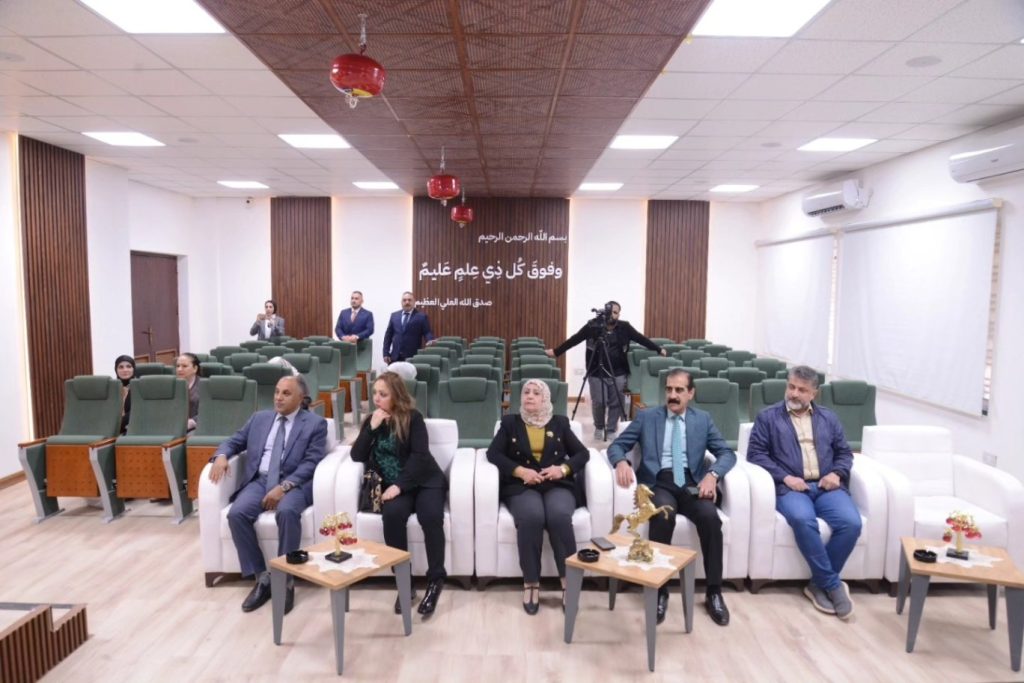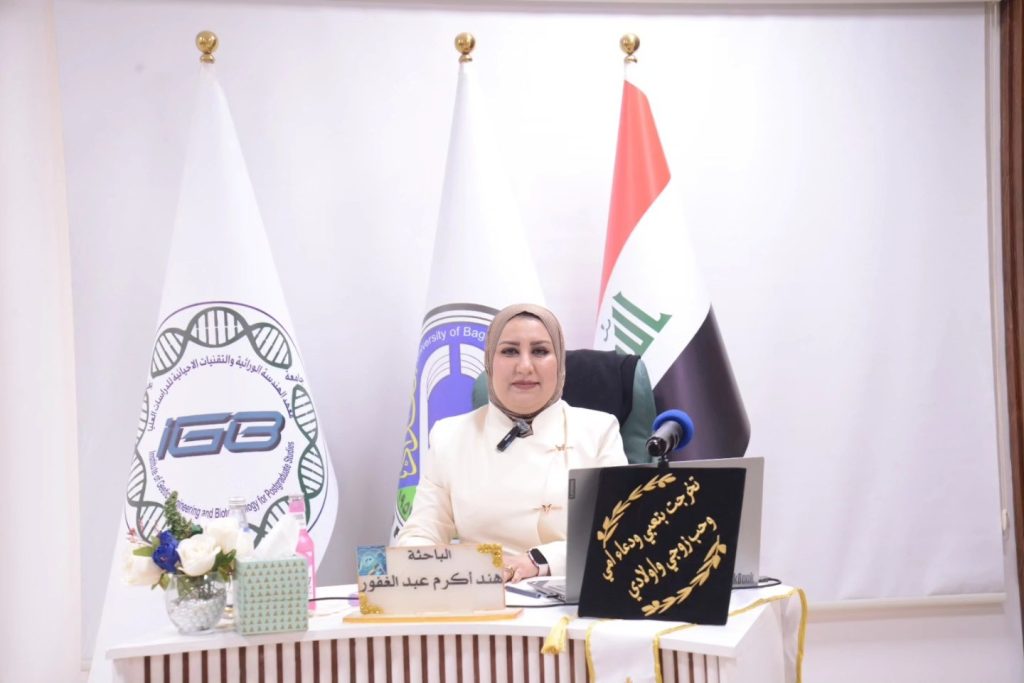
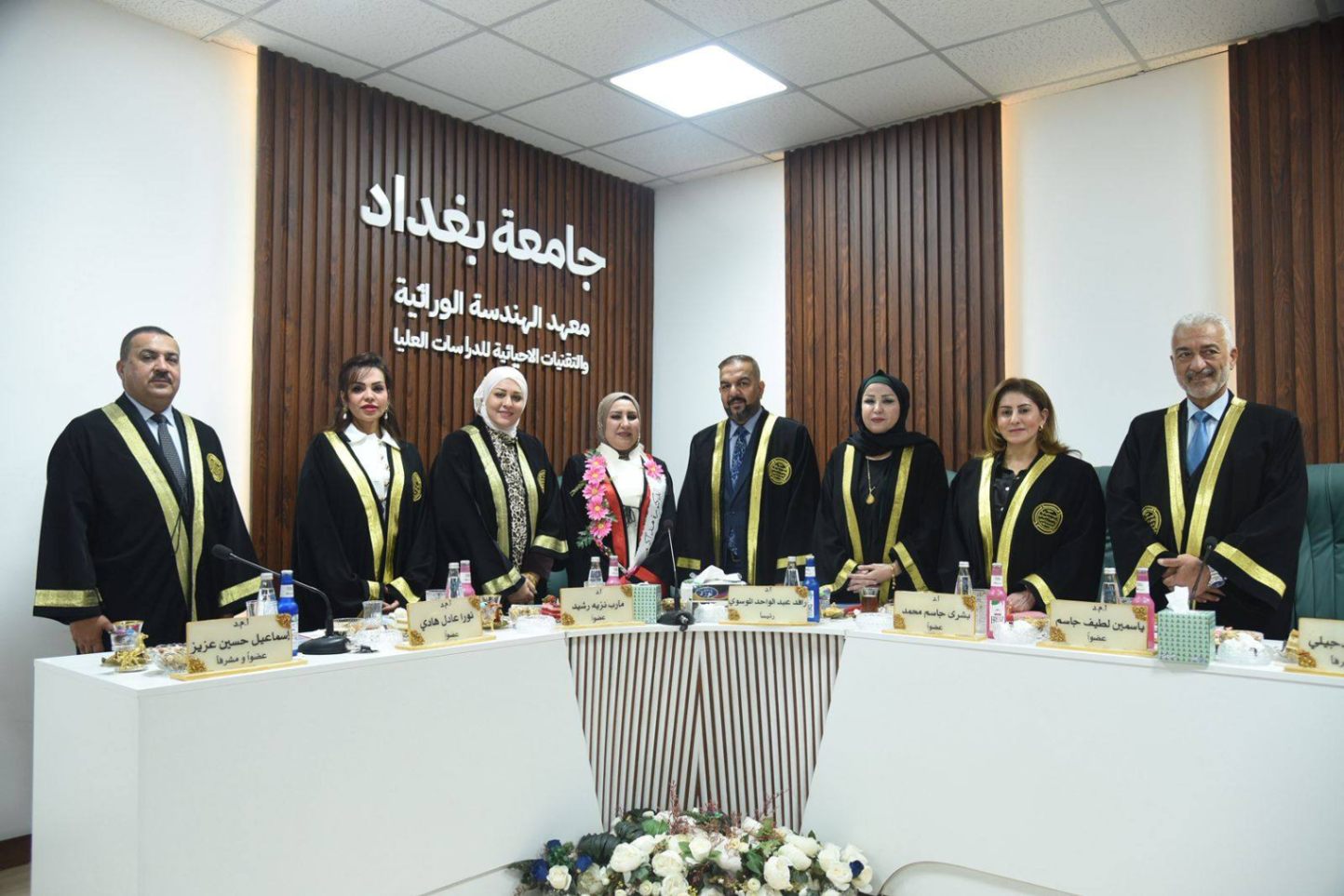
The Institute of Genetic Engineering and Biotechnology for Postgraduate Studies at the University of Baghdad discussed the PhD dissertation submitted by doctoral candidate Hind Akram Abdul Ghafour, entitled:
“Study of the Impact of CATSPER Channel Polymorphisms and Gene Expression in Immunological and Unexplained Infertility Before and After In Vitro Sperm Activation”,
under the supervision of Assistant Professor Dr. Ismail Hussein Aziz.
The study aimed to determine the role of the CATSPER1 gene in the causes and mechanisms of infertility among a sample of Iraqi men, and to investigate the potential association between genetic polymorphisms in this gene—specifically rs1893316 and rs2845570—and both immunological infertility and unexplained infertility.
The research included semen analysis to evaluate sperm count, motility, and morphology. Samples were classified into groups before and after in vitro sperm preparation. The gene expression of CATSPER1 was measured in semen samples, and its relationship with selected study parameters—such as anti-sperm antibodies (ASA)—was examined before and after laboratory sperm preparation.
The study recommended expanding the research to include larger and more ethnically diverse populations to validate the associations of the CATSPER1 gene. It also suggested incorporating CATSPER1 gene expression testing into the diagnostic workup of male infertility, particularly in idiopathic cases.
Furthermore, it recommended promoting genetic counseling for patients found to carry mutations or single nucleotide polymorphisms (SNPs) in the CATSPER1 gene, and integrating molecular diagnostics with routine semen analysis to improve clinical outcomes.
The study emphasized the importance of understanding the interaction between CATSPER1 gene expression, environmental factors, and lifestyle influences.