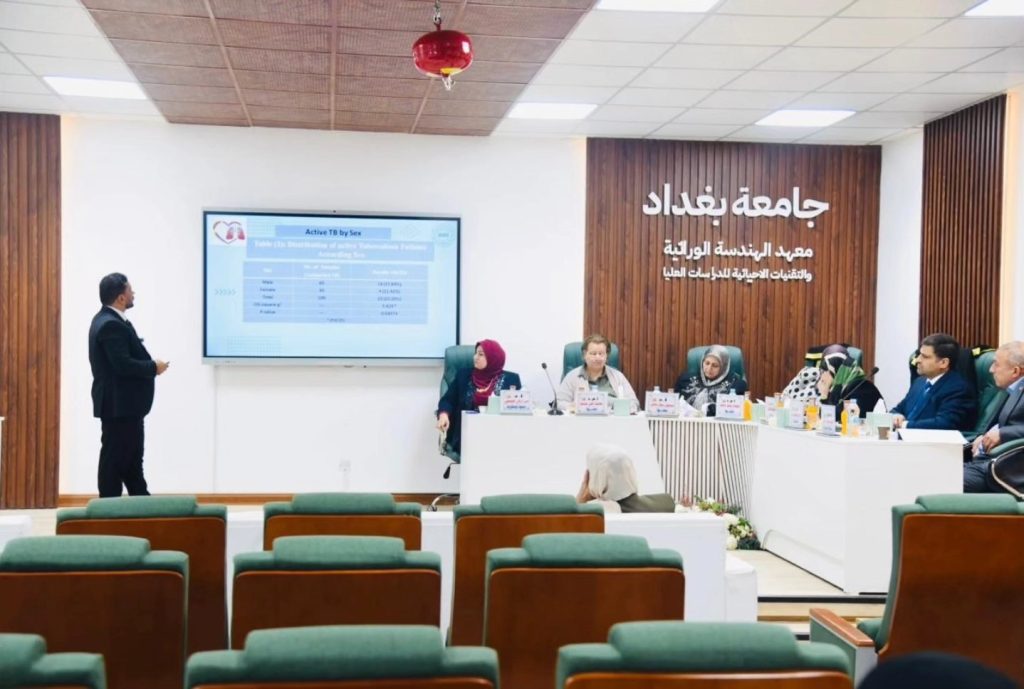
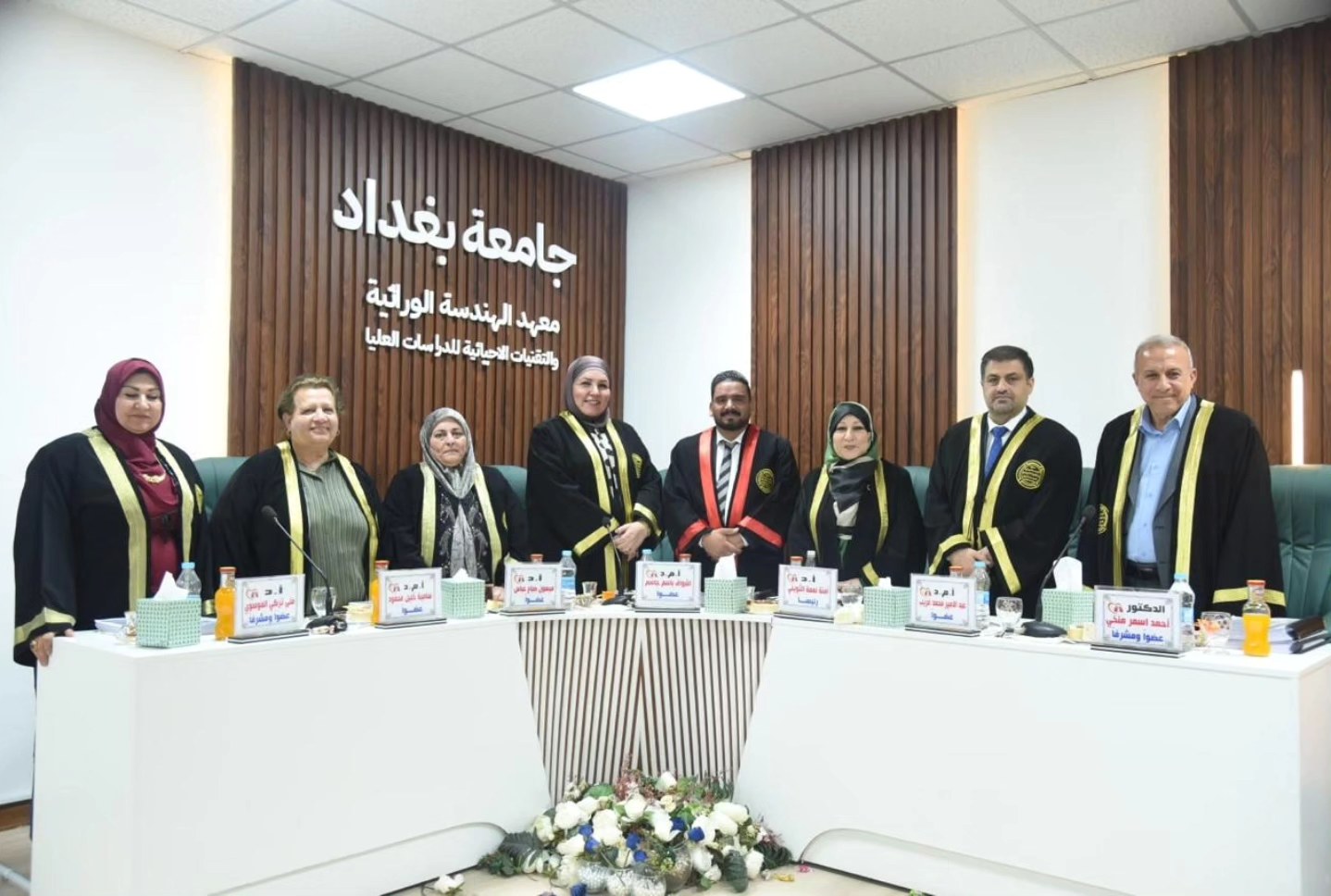
The Institute of Genetic Engineering and Biotechnology for Postgraduate Studies discussed the PhD dissertation submitted by doctoral candidate Salam Hadi Fayyad, entitled:
“Study of Phenotypic and Genotypic Drug Resistance Patterns of Mycobacterium tuberculosis Strains from the Tuberculosis Complex Isolated from Humans and Animals, and Their Association with Genetic Mutations”,
under the supervision of Professor Dr. Mona Turki Al-Mousawi and external supervisor Professor Dr. Ahmed Asmar Mankhi from the National Tuberculosis Institute.
The study aimed to isolate and identify members of the Mycobacterium tuberculosis complex (MTBC) resistant to first- and second-line anti-tuberculosis drugs from positive TB samples, using conventional techniques including culture, Ziehl–Neelsen (ZN) staining, interferon-gamma release assays (IGRA), drug susceptibility testing (DST), molecular analysis of TB-associated proteins (LPA), and evaluating the accuracy of rapid molecular tests such as GeneXpert MTB/RIF, Xpert MTB/XDR, and the new 10-color Xpert MTB/XDR, compared to conventional techniques. The study also aimed to identify resistance-associated genes and detect genetic mutations linked to resistance to first- and second-line injectable anti-TB drugs.
The dissertation recommended enhancing the use of rapid molecular diagnostics (GeneXpert MTB/RIF, Xpert MTB/XDR, and LPA) for early detection of drug-resistant TB, which can reduce the incidence of disease associated with delayed diagnosis and treatment.
It also advised improving the monitoring of drug-resistant TB strains through continuous surveillance of mutations in the rpoB, katG, inhA, gyrA, and rrs genes, and conducting periodic screening for latent TB infections in high-risk groups, such as livestock breeders, animal care workers, and individuals in direct contact with animals.
Furthermore, the study recommended expanding research focusing on environmental, occupational, and genetic risk factors associated with TB spread and drug resistance, ensuring proper management of multidrug-resistant TB (MDR-TB) and extensively drug-resistant TB (XDR-TB), and strict adherence to treatment protocols and regular follow-up.
The study emphasized the necessity of collaboration between relevant institutions under the Ministries of Health and Agriculture to establish a national program for controlling genetically modified TB, particularly bovine TB transmissible to humans, and implementing stricter biosafety measures on farms.