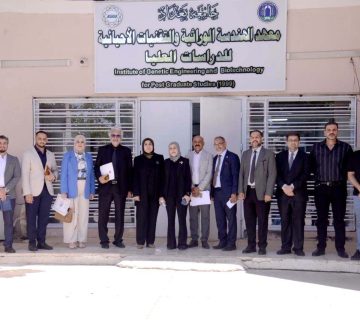

In an atmosphere filled with national pride and scientific achievement, the Institute of Genetic Engineering and Biotechnology for Postgraduate Studies at the University of Baghdad witnessed a distinguished master’s thesis defense by the student “Waad Khalil,” held just one hour after the announcement of our national team’s victory and qualification for the 2026 FIFA World Cup.
The thesis was jointly supervised by Professor Dr. Majid Shaya’ Hamdallah and Assistant Professor Dr. Ashwaq Basim Jassim. The study, entitled: “The relationship between fsr genes and certain virulence factors in Enterococcus faecalis isolated from urinary tract infections,” aimed to highlight the genetic and regulatory role of this bacterium in disease pathogenesis.
The study results revealed important indicators supporting a strong correlation between the studied genes and virulence factor activity, opening new horizons for understanding the behavior of pathogenic bacteria and for developing diagnostic and therapeutic approaches.
The discussion concluded with several scientific recommendations, emphasizing the importance of expanding future studies—particularly those focusing on measuring gelatinase enzyme levels and its role in biofilm formation. It also highlighted the need for comprehensive investigation of the fsr quorum-sensing system, including the genes fsrA, fsrB, fsrC, and fsrD, and analyzing their gene expression to achieve a clearer understanding of their relationship with bacterial virulence.
Additionally, the study recommended conducting gene sequencing analyses for isolates lacking certain regulatory genes to detect potential mutations, as well as monitoring antibiotic resistance patterns—especially to Linezolid—and understanding the underlying mechanisms of this resistance.